
Organic search remains the primary source of organic traffic for websites. Businesses of all sizes, from small and medium-sized enterprises to large corporations, are looking for professionals who can manage a comprehensive SEO strategy. There is no single path to mastering this discipline: it combines technical learning, hands-on experience and ongoing monitoring of changes to search engines.
Technical SEO and crawling: the foundation most learning paths overlook
Most online courses and guides devote the bulk of their content to keyword research and content writing. The technical side of SEO, however, is often covered only superficially, even though it underpins everything else.
A site whose pages are not properly crawled by search engine bots will gain no benefit from optimized content. Understanding how the robots.txt file, XML sitemap and indexing directives work is essential before developing any content strategy.
Google also recommends reviewing robots.txt rules in light of practices related to artificial intelligence. Generative search features (AI Overviews, AI Mode) draw on indexed pages using the same criteria as traditional search. No special markup is required to appear in them: a page simply needs to be indexed and eligible for web search snippets. This connects technical SEO with content governance and publishing decisions.
Anyone looking to become an SEO expert with Ask Nerd will encounter this technical approach in the early stages of the learning path, before even moving on to content production.
Key SEO skills: beyond keywords

Reducing SEO to keyword research would be a mistake. An SEO expert needs to bring together several areas of expertise that work in tandem.
- Server log analysis helps reveal how Google actually crawls a site, which pages it visits, which it ignores and how often. This skill sets an advanced practitioner apart from a generalist.
- Knowledge of structured data (schema.org) helps search engines interpret content and generate rich results. Google emphasizes the quality of structured markup and its associated content when determining eligibility for rich features.
- The ability to read and interpret Google Search Console reports remains a core skill. Clicks from AI Overviews are included in the “Web” search type, with no separate report. An expert must therefore know how to cross-reference multiple signals to explain a change in traffic, rather than attributing it to a single cause.
- Understanding link building and the concept of E-E-A-T (Experience, Expertise, Authoritativeness, Trustworthiness) helps build a domain’s authority over the long term.
Each of these skills takes months of practice to develop. You can’t become an SEO expert in just a few weeks of theory-based classes: mastery comes from repeatedly applying what you’ve learned to real websites and working with measurable data.
SEO training: structured courses or self-directed learning
There are two main ways to learn SEO. Structured professional training programs provide a learning framework, sometimes with certification, and cover the core pillars of SEO over several dozen hours. Some can be funded through the CPF.
Self-directed learning relies on Google’s official documentation, specialist blogs, forums and personal experimentation. This approach requires more discipline, but it has one advantage: working on your own web projects forces you to solve real-world problems that training exercises don’t always replicate.
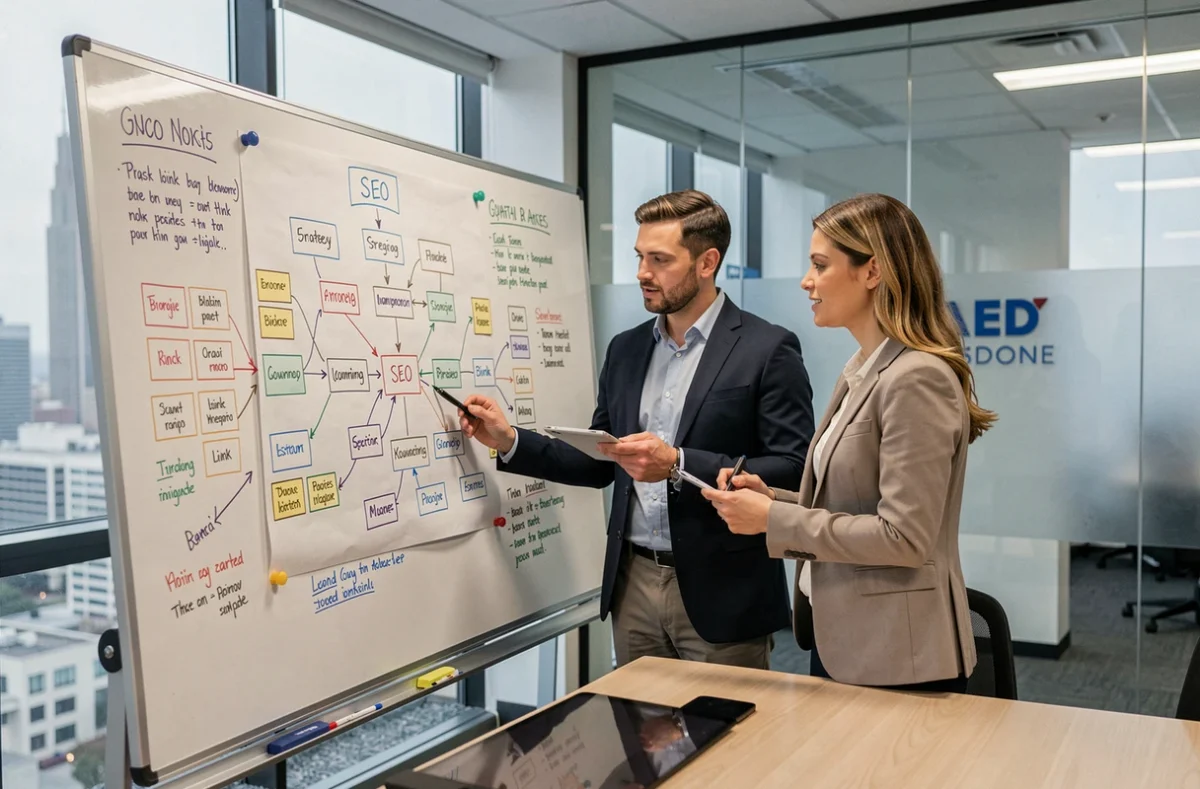
The two approaches are not mutually exclusive. A hybrid path, where initial training provides the fundamentals and independent practice deepens knowledge of each topic, suits most practicing SEO consultants.
One well-known limitation of self-directed learning is advanced technical SEO. Topics such as crawl budget optimization, server-side JavaScript rendering and site migrations require a structured learning framework or mentorship. Free online resources rarely cover these cases in the depth needed.
Measuring your SEO progress: the metrics that matter
Acquiring theoretical knowledge is not enough. Aspiring experts need to know how to assess the impact of their work on a real website. Search Console, rank-tracking tools and log analysis make up the essential toolkit.
Data must be interpreted with care. Since Google does not yet separate clicks from AI-generated answers from traditional organic traffic in its reports, attributing a rise or fall in traffic to a single factor is still uncertain. Current sources do not allow visibility in AI-generated results to be measured separately through Search Console.
A more reliable measure of progress is the ability to formulate testable hypotheses. A beginner changes a title and hopes for a result. An expert formulates a specific hypothesis (target term, page in question, observation period), measures the outcome and documents the conclusion, whether positive or not.
SEO is constantly evolving. Algorithm updates, the growing integration of AI into Google search results and changes in user behavior regularly reshape best practices. Staying informed, questioning what you know and experimenting with real-world projects remain the three constants on the path to SEO expertise.