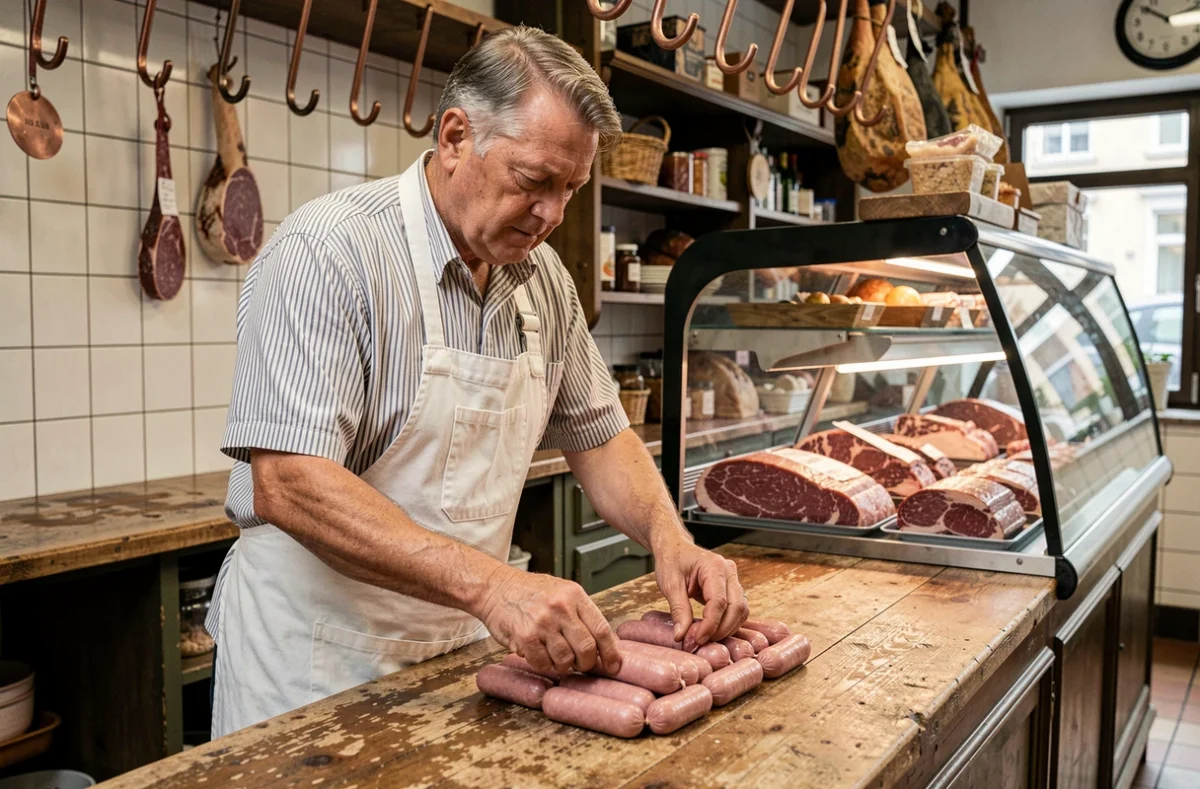
The Frankfurt sausage is one of those products that everyone knows without really knowing where it comes from. Associated with hot dogs, school cafeterias, or family barbecues, it bears the name of a German city but circulates in very different forms depending on the country. Its composition, name, and even its history vary from continent to continent, sometimes from one supermarket aisle to another.
Frankfurter Würstchen: what the name actually refers to in Germany
In Frankfurt am Main, the Frankfurter Würstchen remains a product rooted in local tradition. It is a fine sausage made from pork, presented in a natural casing. The recipe is based on lean pork meat, pork fat, water, and salt, with no beef or poultry.
Outside of Germany, the term “Frankfurter” has come to cover preparations that are very far from this base. This shift between the name and the actual content fuels debates around the protection of geographical indications in food.
The history of Frankfurt sausages dates back to the butchers’ guilds of the city, specialized in smoked charcuterie. The product as we know it stabilized in the 19th century, with the refinement of smoking and preservation techniques.
Johann Georg Lahner and the confusion between Frankfurt and Vienna
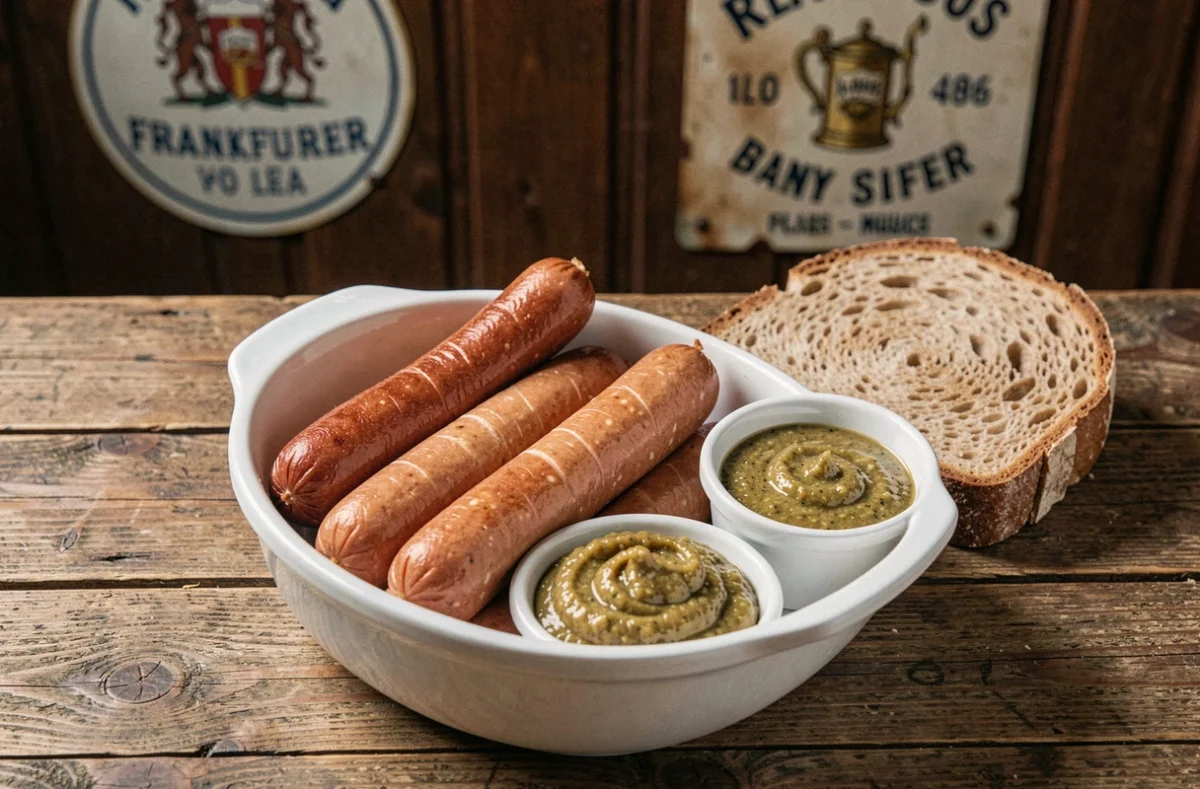
Johann Georg Lahner, a butcher from the Frankfurt region, settled in Vienna at the beginning of the 19th century. According to the most widely circulated account, he combined Frankfurt expertise with local ingredients, notably beef. The result: what the Viennese call “Wiener Würstchen,” the Viennese sausage.
The people of Frankfurt claim precedence for their sausage. The Viennese believe that Lahner created something different. The available documentary sources do not establish whether Lahner adapted an existing recipe or designed a truly new preparation.
What is documented is that the two cities developed parallel but distinct charcuterie traditions. The Frankfurter uses exclusively pork. The Wiener mixes pork and beef. This difference in composition, even if slight, alters the texture and taste of the final product.
Frankfurt sausage in the United States: a legally different product
In the United States, federal regulations allow the use of the term “Frankfurter” for cooked and chopped sausages, smoked or not. Some variants include offal, provided it is mentioned on the label. The composition may also include poultry, preservatives, colorings, or artificial smoke flavors.
This regulatory flexibility widens the gap with the original German product. An American supermarket “frankfurter” and one from a brewery in Frankfurt often share only the name.
The hot dog question
The hot dog, this sausage served in a small bun, has several competing origin stories. No version has reached consensus among historians.
The history of the meat product and that of the fast food format are two distinct subjects that have gradually merged in the collective imagination.
Geographical protection in Europe: PDO, PGI, and sausage designations
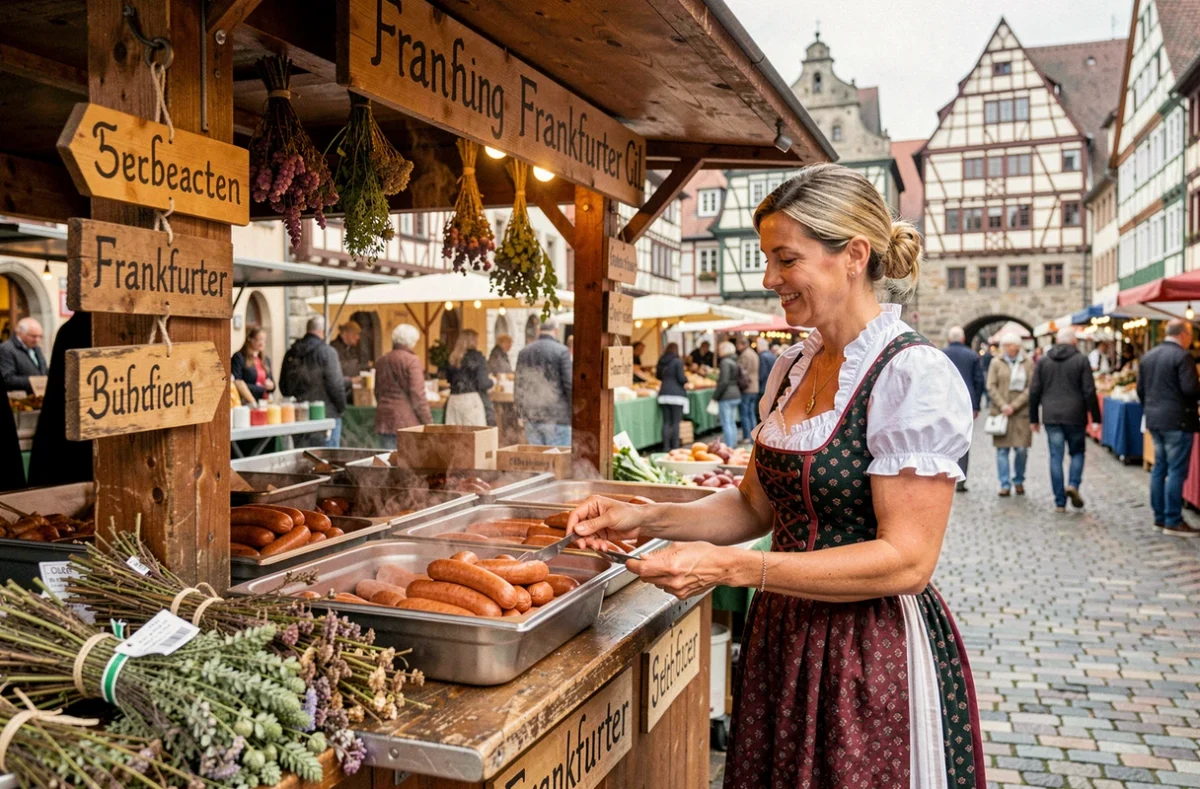
The European framework distinguishes several levels of protection for food products. PDO requires that production, processing, and preparation take place in a defined geographical area. PGI is more flexible: it is sufficient that the reputation or a characteristic of the product is linked to a territory.
The Frankfurter Würstchen enjoys protection in Germany, but not all products bearing a geographical name enjoy the same level of protection at the European level. A French or Spanish manufacturer is not subject to the same constraints depending on the status of the designation.
- The PDO ties the product to a specific terroir, from raw material to packaging, which blocks any relocation of production.
- The PGI protects the reputation linked to an origin while allowing that certain stages of production can take place elsewhere.
- A name that has become generic (like “frankfurter” in the United States) escapes all protection and can refer to any sausage meeting minimal technical criteria.
The vacuum-packed Frankfurt sausage sold in a refrigerated aisle in France shares a name with its German ancestor. The recipe, however, has taken a completely different path.
Composition and cooking of the traditional Frankfurt sausage
A few ingredients suffice for the traditional recipe: lean pork meat, pork fat, water, and salt. The mixture is finely chopped and then stuffed into a natural casing.
Cooking is done by poaching in simmering water, never boiling. A temperature that is too high causes the casing to burst and dries out the meat. A few minutes in water kept just below boiling point warms the sausage without altering it.
- Gentle poaching preserves the juice and soft texture, unlike boiling water which makes the sausage rubbery.
- Pan-frying with a drizzle of oil allows for coloring without a barbecue, a simple alternative in home cooking.
Between the artisanal version produced in the Frankfurt region and the industrial vacuum-packed tube sold worldwide, the name is the same. The product, however, tells two very different stories.