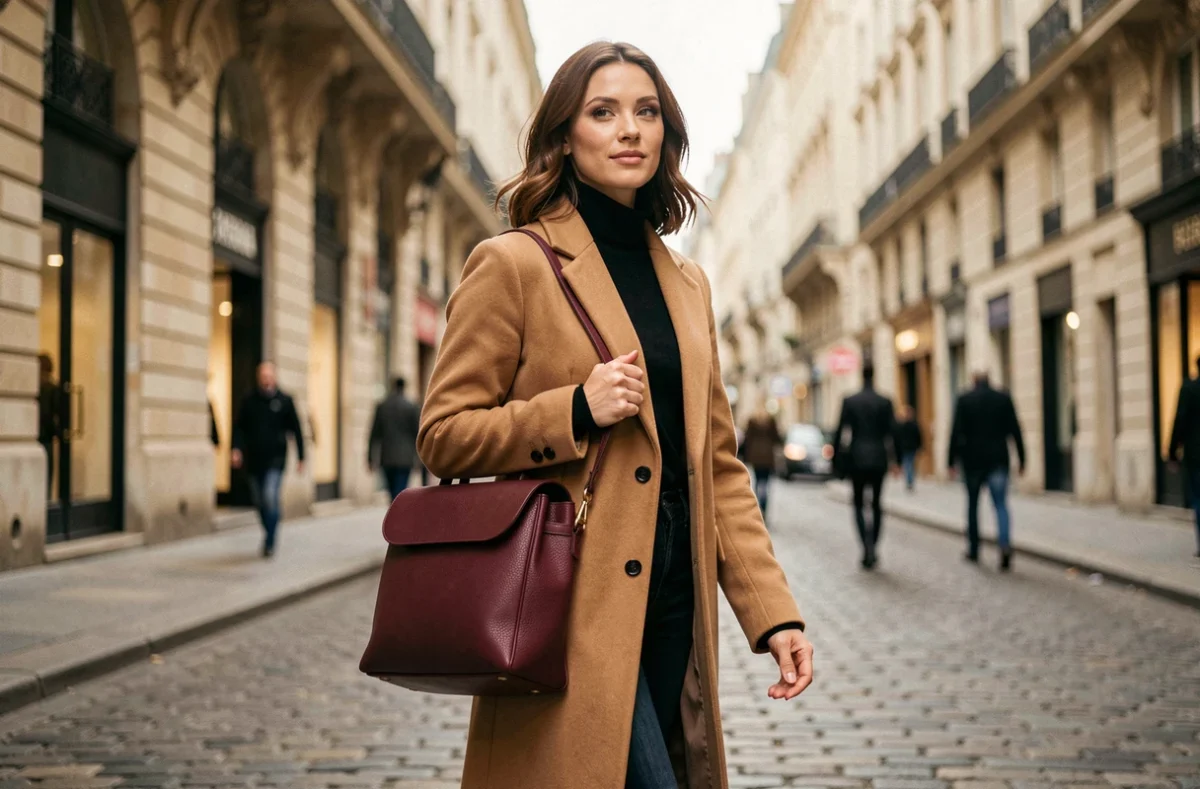
The urban backpack for women is no longer just a practical format worn out of necessity. Current models incorporate specific technical constraints (back ergonomics, digital protection, passive security) that most fashion items overlook or ignore. We are observing a clear shift: the specifications for an urban backpack are now closer to those of professional mobility equipment.
Back ergonomics of the urban backpack: what adjustment really changes
A backpack does not eliminate the musculoskeletal constraints of a handbag or tote; it redistributes them. The symmetrical weight distribution across both shoulders relieves the upper trapezius, but it puts more strain on the lower back if the volume is poorly positioned or if the straps are too loose.
Models designed for daily urban use incorporate three elements that make a difference in practice: padded and height-adjustable straps, a padded back with a ventilation channel, and, for loads exceeding a few kilos, a thin waist belt that transfers some of the weight to the hips. Without these three well-adjusted contact points, carrying a backpack for eight hours a day merely shifts the problem, not solves it.
The backpack trend for urban women is precisely based on this convergence between technical requirements and urban silhouette. Brands that offer non-adjustable straps or a flat back panel without structure sacrifice real comfort for aesthetic shape, and we recommend avoiding them from the outset.
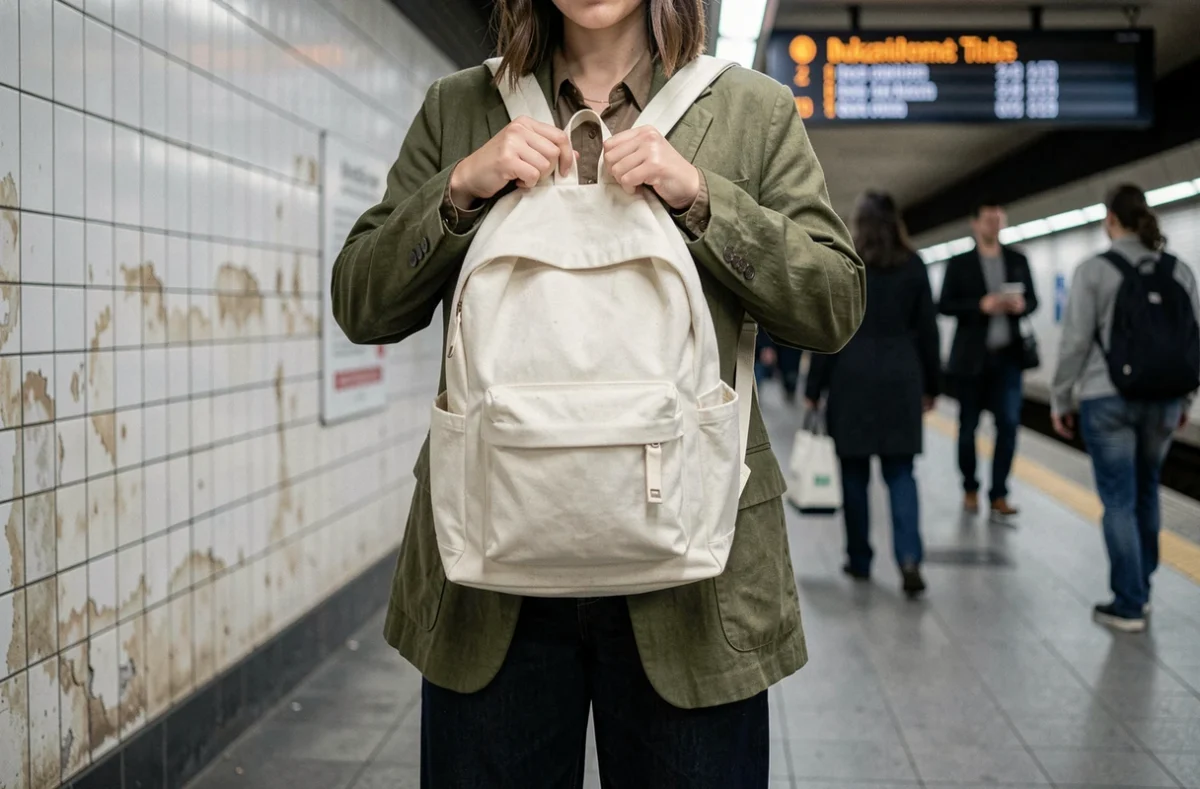
Laptop compartment and digital uses: specifications for a hybrid bag
The commute from home to office to third place requires carrying a laptop, a charger, sometimes a tablet, and accessories (mouse, adapter, headphones). An urban backpack that does not include a padded laptop compartment isolated from the rest of the contents is not a work bag; it is a leisure bag with a “city” label.
The most advanced models physically separate the digital area from the textile and food area. This partitioning prevents contact between a water bottle and a laptop, a scenario that any tote bag user has experienced. Some also include an external quick-access pocket for the phone, which reduces the number of openings of the main compartment during transport.
Capacity and format according to travel profile
For a non-stop metro-office commute, a volume of fifteen to twenty liters is sufficient. A larger format is suitable for split days (office in the morning, coworking in the afternoon, sports in the evening), provided the bag remains structured at half-load. A bag that is too soft and collapses when half-empty loses its back support and comfort.
- Short commute (less than 30 minutes): compact model, one laptop pocket, no waist belt needed.
- Mixed day (office, meetings, transport): intermediate volume, separate compartments for digital and personal items, adjustable straps.
- Professional travel with overnight stay: cabin format, flat or semi-suitcase opening, water-repellent material on the outer face.
Passive security in transport: anti-theft closures and resistant materials
Security has become a full-fledged design criterion, not just a marketing argument. Recent market analyses identify several features that address the concrete risks of heavily trafficked areas: hidden zipper anti-theft closures, cut-resistant fabrics, RFID-blocking pockets for contactless bank cards, and in some cases, an integrated GPS tracking system.
In practice, the back closure (zip placed against the back) remains the most effective and least expensive solution. It makes the bag impossible to open while being worn. Models with visible zippers on the top or side expose the contents in a crowded metro, regardless of the bag’s price.
Leather, ballistic nylon, or recycled polyester: which textile for which use
The choice of material determines the bag’s durability, weight, and maintenance.
- Full-grain leather ages well and resists abrasion, but it adds weight to the bag and does not handle prolonged rain well without treatment.
- Ballistic nylon (originally used in military equipment) offers the best strength-to-weight ratio and is easy to clean, at the cost of a less refined appearance.
- Recycled polyester meets a growing environmental demand. Its tear resistance is adequate, but its longevity heavily depends on the thread denier and weaving quality.

Women’s backpack and urban style: what distinguishes a good model from a gadget
A successful urban backpack is not recognized by the number of available colors or its presence on Instagram. It is recognized by its ability to transition from the office to the restaurant without changing bags. The shift of the backpack into women’s fashion relies on clean lines, proportions suited to various body types, and careful finishes (invisible seams, matte hardware, discreet logo).
We are seeing structured rectangular models with magnetic flaps gradually replacing soft drawstring shapes. This format offers quicker access to the contents and a sharper silhouette when worn over a coat or blazer. Style never compensates for an ergonomic flaw, but with equal comfort, the design of the bag makes the difference between an accessory worn out of necessity and one chosen.
The market is now segmented between products designed to last several seasons and disposable models sold solely on the promise of a low price. A daily backpack worn five days a week undergoes more mechanical stress than a cabin suitcase used once a month. Investing in reinforced seams, YKK zippers, and sufficiently dense fabric is not a luxury; it is a condition for durability.