
A wedding is typically planned over twelve to eighteen months. This timeframe is not due to the number of tasks, but rather to the availability of vendors and the administrative timelines that govern the civil ceremony. Organizing a wedding involves coordinating about ten different trades around a single date, within a budget that most couples initially underestimate.
Weekday Weddings: The Budget Lever Couples Still Overlook
Since the post-Covid recovery, wedding planners have noticed a significant increase in weddings held from Monday to Thursday. The reason is twofold: reception venues now apply differentiated pricing grids for weekdays and weekends, and the most sought-after vendors (photographers, caterers, florists) remain available during these less competitive slots.
This trend changes the way a budget is constructed. A couple that agrees to move the ceremony to Friday, or even Thursday, often gains access to a venue or caterer that would be fully booked on a June Saturday. The financial gain mainly concerns the venue rental and catering services, the two items that weigh the heaviest.
The trade-off is logistical: some guests will need to take a day off. To limit cancellations, it’s better to send out invitations earlier than for a traditional Saturday wedding. By browsing the entire Info Mariage site, one can see how much each choice of date influences vendor availability and the overall budget.
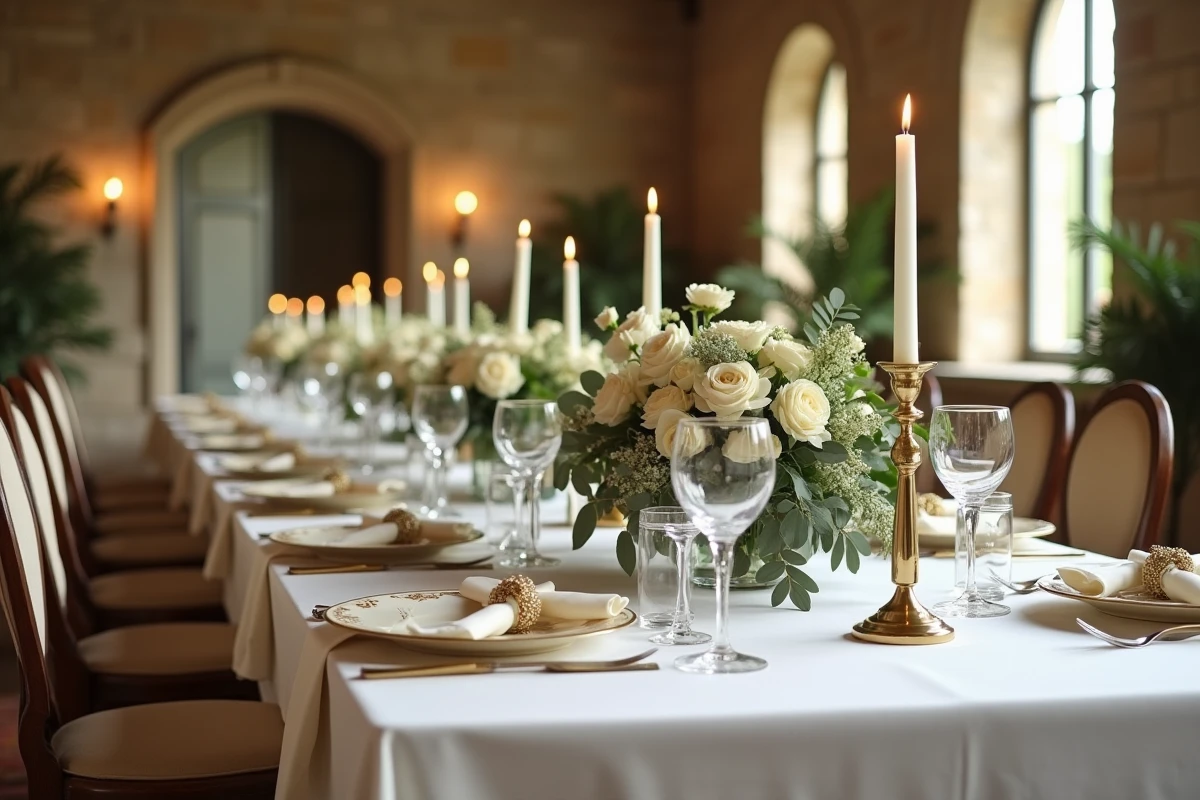
Wedding Budget 2025-2026: Identifying the Items That Have Really Increased
The median cost of a wedding in France is now in a significantly higher range than before 2020. Inflation on raw materials and energy has particularly affected three items: catering, flowers, and the reception venue. These three budget lines alone represent the majority of the final bill.
Distributing the Budget Before Seeking Vendors
The most reliable method is to set a total budget and then apply percentages to each item. A common mistake is to book the venue first without estimating the catering costs, whereas the catering often exceeds the venue cost.
- Reception venue and catering: the two items to negotiate together, as some venues require their caterer (and the margin is included in the package)
- Photography and video: an investment whose value is measured after the wedding, not to be cut back as a last resort
- Decoration and flowers: the most flexible item, where a change in style (dried flowers, local foliage) can significantly reduce the bill
- Entertainment and music: DJ, live band, or both, with considerable price differences depending on the format of the evening
Before any signing, always request a detailed quote with the cost per person and any extras (overtime, travel expenses, VAT). A contract without a ceiling amount exposes you to overruns that are difficult to contest.
Digital Tools for Wedding Planning: QR Codes and Collaborative Galleries
Platforms dedicated to guests have multiplied in recent years. The principle: a website or app centralizes practical information (access map, accommodation, menu), the gift list, and RSVP. Several solutions also allow you to collect guests’ photos via a QR code placed on tables or integrated into the invitation.
This system replaces or complements the traditional photobooth. Guests scan the code with their phones and send their pictures directly to a shared gallery, accessible in real-time or after the ceremony. The result: hundreds of photos from different angles, without having to chase each guest for their contributions.
What These Tools Change in Practice
A well-configured organization site reduces the number of individual messages to manage. RSVP responses arrive in a single table, dietary allergies are collected simultaneously, and the seating plan can be adjusted based on confirmations received. The mental load related to follow-ups decreases significantly as soon as the number of guests exceeds fifty.

Civil or Religious Ceremony: What the Choice Implies in Advance
The civil ceremony at the town hall is mandatory. The question that truly structures the preparations concerns the complementary ceremony: religious or secular. This choice has direct consequences on the day’s schedule, the reception venue, and the budget.
A secular ceremony is usually held at the reception venue (garden, barn, terrace). It eliminates the trip from town hall to church to venue and frees up time for the cocktail. However, it requires an officiant, sound equipment, and sometimes a specific decor, adding more items to the budget.
A religious ceremony imposes calendar constraints (marriage preparation several months in advance, availability of the place of worship) and requires fine coordination between the parish and the other vendors. The travel time between the church and the reception venue is an underestimated factor that eats into the cocktail duration.
- Check available times at the town hall at least six months before the desired date
- For an outdoor secular ceremony, always plan a backup solution in case of rain
- For a religious ceremony, confirm with the place of worship that the date does not conflict with a liturgical feast
The choice between these two formats depends on the couple’s beliefs, but also on logistics. A smooth day relies on a seamless flow without downtime between the ceremony, cocktail, and meal. Each additional trip lengthens transitions and tires guests even before the evening begins.
Organizing a wedding is not just about ticking off a list of vendors. The timeline, ceremony format, and management tools form a system where each element depends on the others. Booking a venue on a Thursday changes the catering budget, which alters the margin available for decoration.
Starting with the most constraining item (the date or venue) and adjusting the rest in a cascading manner remains the most solid method to maintain both the budget and the quality of the day.