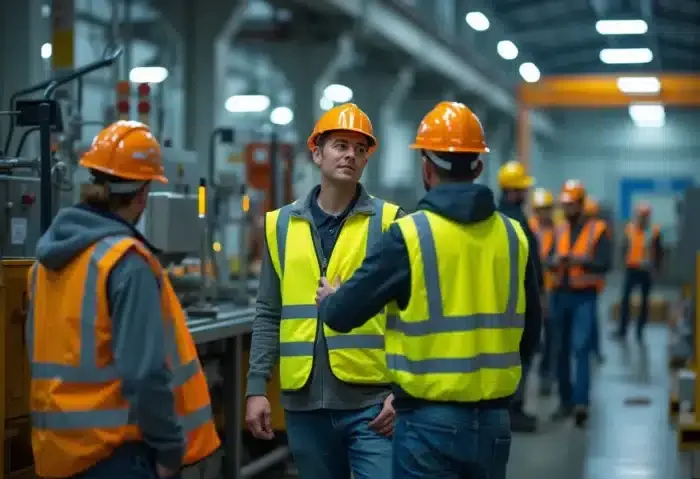
Technological advancements and new working methods have disrupted the industrial sector, requiring increasingly sophisticated safety measures. Companies are now adopting accident prevention strategies that integrate both technological innovations and human approaches.
The implementation of smart sensors, real-time data analysis, and ongoing employee training are some of the common practices. These tools allow for the detection of risks before they materialize and enable quick responses in case of an incident. The commitment of teams, coupled with these technologies, significantly enhances workplace safety.
Innovative Technologies for Industrial Accident Prevention
The evolution of digital technologies has transformed the way companies approach industrial risk prevention. The adoption of smart sensors and real-time monitoring tools allows for early detection of anomalies. These devices, by continuously capturing data, provide better visibility on working conditions and enable rapid intervention in case of imminent danger.
Digital Tools for Safety
Companies now use integrated systems that combine several technologies, such as:
- PAAF2: a predictive analysis tool that anticipates potential risks based on statistical models and advanced algorithms.
- IoT sensors: placed on equipment, they monitor critical parameters in real-time, such as temperature, pressure, or vibrations.
- Risk management platforms: they centralize collected data and facilitate decision-making through interactive dashboards.
Implementation of These Technologies
The implementation of these technological innovations requires an initial investment, but the benefits in terms of safety and incident reduction are significant. Companies must also train their employees in the use of these new tools to ensure effective adoption and maximize their impact.
Industrial Risk Management
Consider that the integration of these technologies is not limited to risk detection. They also facilitate proactive management of industrial risks by allowing decision-makers to plan preventive actions more informedly. The combination of human expertise and digital tools constitutes a holistic approach to enhancing safety in industrial environments.

Organizational and Human Strategies for Effective Prevention
Professional risk prevention relies on a robust legislative framework. The Canadian Labour Code requires employers to design and implement a program for the prevention of occupational risks. Similarly, the Canadian Occupational Health and Safety Regulations (COHSR) provide a methodological framework for establishing appropriate preventive measures.
Risk Assessment and Safety Culture
Each company must systematically assess the risks to which its workers are exposed. Several methods can be employed for this assessment, including:
- FMEA (Failure Modes and Effects Analysis): a methodology for identifying, evaluating, and prioritizing potential failure modes.
- ISHIKAWA (or cause and effect diagram): identifies and analyzes the potential causes of a specific problem.
- 5 Whys: a method of repeatedly asking ‘why’ to identify the root causes of a problem.
Training and Worker Participation
Risk management training in the workplace is essential for ensuring safety. Workers must be trained in best practices and prevention tools. The Occupational Health and Safety Act (OHSA) encourages active worker participation, informing and consulting them on health and safety matters in the workplace.
Role of Regulatory Bodies
Specific guidelines applicable to each sector can be consulted with the relevant authorities, such as the Commission des normes, de l’équité, de la santé et de la sécurité du travail (CNESST) in Quebec. These organizations provide clear guidelines to help companies comply with regulations and protect their workers.