Creating a green haven where nature reclaims its rights is quite an art. For gardening enthusiasts and novices eager to infuse life and beauty into their outdoor spaces, there are numerous techniques to master. From the arrangement of flower beds to the careful selection of plants, along with irrigation management and regular soil maintenance, every detail matters. Cultivating a lush garden requires patience, know-how, and a good dose of creativity. But what are the most effective strategies to transform a simple plot of land into a verdant paradise?
The fundamentals of a lush garden: plant selection and soil maintenance
Choosing plants suited to the local climate proves to be a decisive step for the longevity of a garden. Indeed, the survival and growth of plants depend on a pre-established harmony with their environment. Consult horticultural guides or seek advice from nurserymen to identify the species that will thrive in your region. Native plants, for example, have the advantage of being already acclimatized and require less maintenance while promoting local biodiversity.
Soil maintenance is another pillar in achieving a vibrant garden. A rich, well-drained soil amended according to the specific needs of the plants ensures optimal growth. To achieve this, incorporate organic matter such as compost, practice crop rotation, and conduct periodic soil analyses to adjust pH and nutrients.
In the quest for a dense and vigorous lawn, many turn to the traditional method of tilling the soil. However, there is a less labor-intensive and equally effective alternative: sowing a lawn without tilling the soil. This technique, known as ‘direct seeding’, preserves the soil structure and reduces erosion while providing a favorable environment for the quick establishment of grass.
Consider biodiversity and ecological interactions in your garden. Encourage the presence of pollinating insects and natural predators by creating diverse habitats: hedges, wood piles, insect hotels. By doing so, you will support the natural balance, limit diseases and pests, and contribute to a garden that is both vibrant and flourishing.
Design strategies: structuring space and decor tips
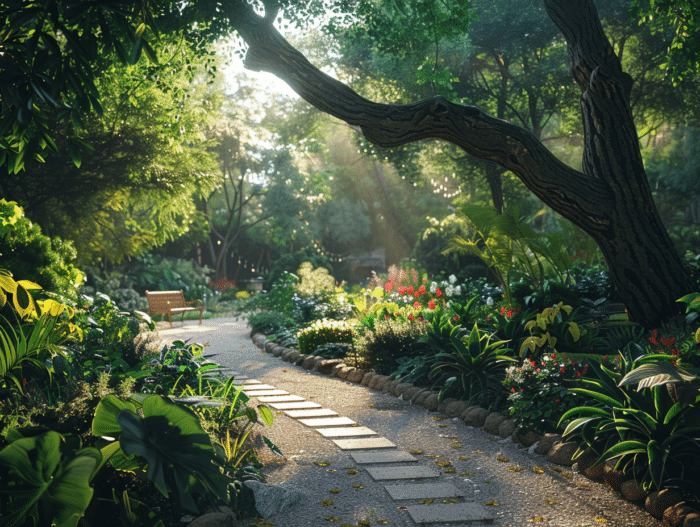
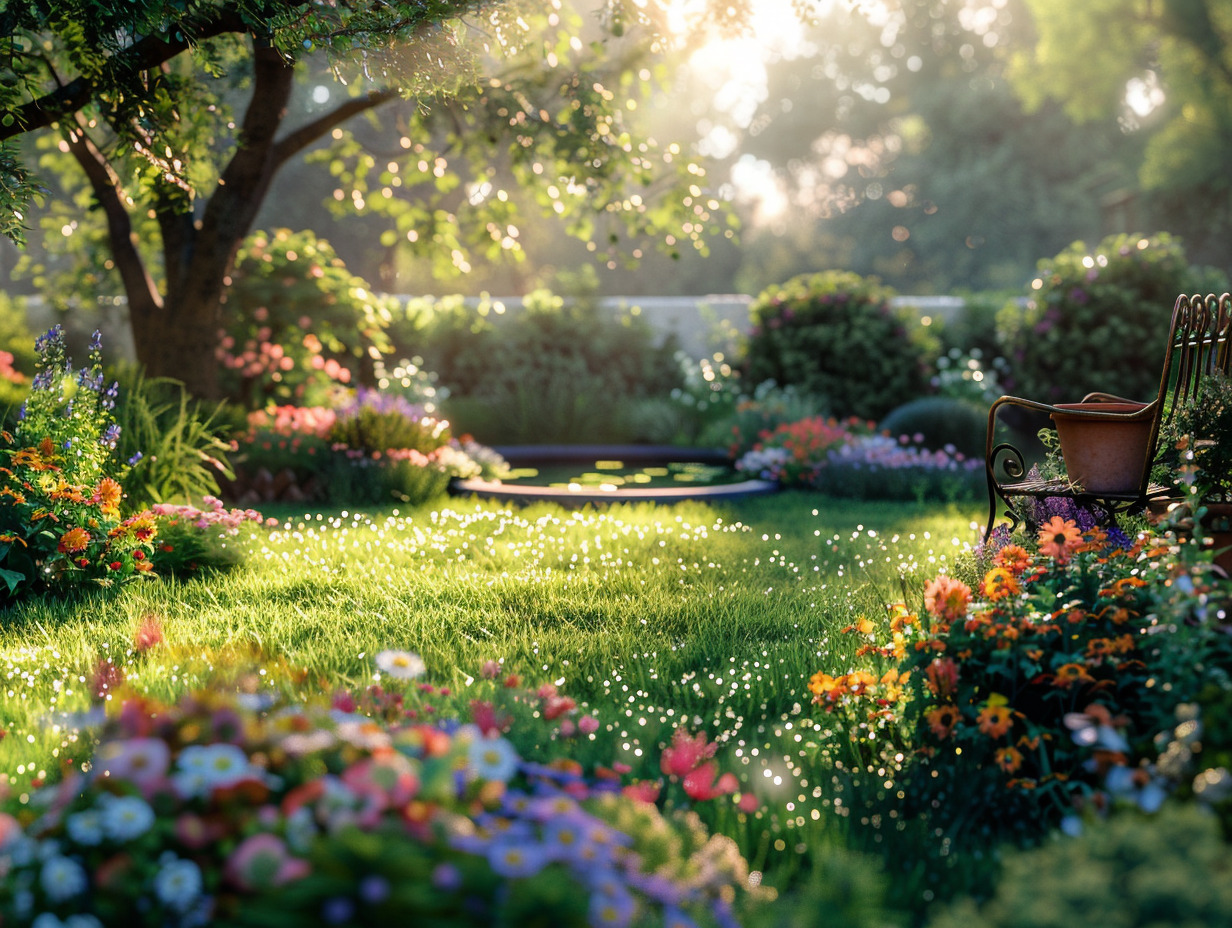
Strategically placing pathways contributes to smooth and aesthetic circulation in the garden. Consider pathways not only as a means of movement but also as an invitation to explore the space. Their layout should create surprise and curiosity, guiding the eye towards focal points in the garden, such as flower beds or water features.
Setting up garden furniture that is functional and harmonious with the environment adds visual and practical comfort. Select pieces that are weather-resistant and that complement the garden’s style. A well-designed terrace, for example, becomes an extension of the home and a favored spot for relaxation and socializing. Be sure to choose materials and colors that are consistent with the surrounding plants.
The installation of a lawn and various thematic spaces, such as a vegetable garden or a play area for children, should follow a logic of space optimization. Conceal unsightly areas with thoughtfully chosen plantings and utilize every nook to bring life. The use of borders, flower beds, and plantings helps to structure the garden and delineate activity zones.
Don’t forget to shield from prying eyes and provide shade. There are multiple solutions: living fences, pergolas, shade sails, or even fences. These elements, in addition to their primary function, can become true decorative pieces. Do not overlook practical aspects such as orientation, ease of access, and maintenance. A well-thought-out garden is one where every detail has its reason for being, serving an aesthetic and functionality that complement each other.