
Google’s AI Snapshots are reshaping the landscape of organic search in France. Optimized content for traditional results no longer guarantees clicks or visibility: the generated response captures an increasing share of attention on informational queries. Adapting your SEO strategy to this new context requires a clear distinction between pages designed to inform and those intended to convert.
Visibility in generative engines: what traditional SEO does not cover
Competing articles detail tags, internal linking, and keyword research. They overlook a structural change: AI Snapshots respond directly to informational queries without the user needing to click on an organic result. Data shared by Abondance shows that these generated responses appear much more frequently on evaluative searches (“how”, “why”, “which one to choose”) than on transactional queries.
We observe that this distinction imposes a dual objective. For informational content, the goal should be to be cited in the generated response. For transactional pages, traditional organic positioning remains the main lever.
Google’s documentation specifies that there is neither special markup nor specific technical file required to appear in its generative features. Pages must be crawlable, indexable, and useful. In other words, by applying Geekfinity’s SEO advice on technical and editorial fundamentals, you already meet the eligibility prerequisites for AI Snapshots.
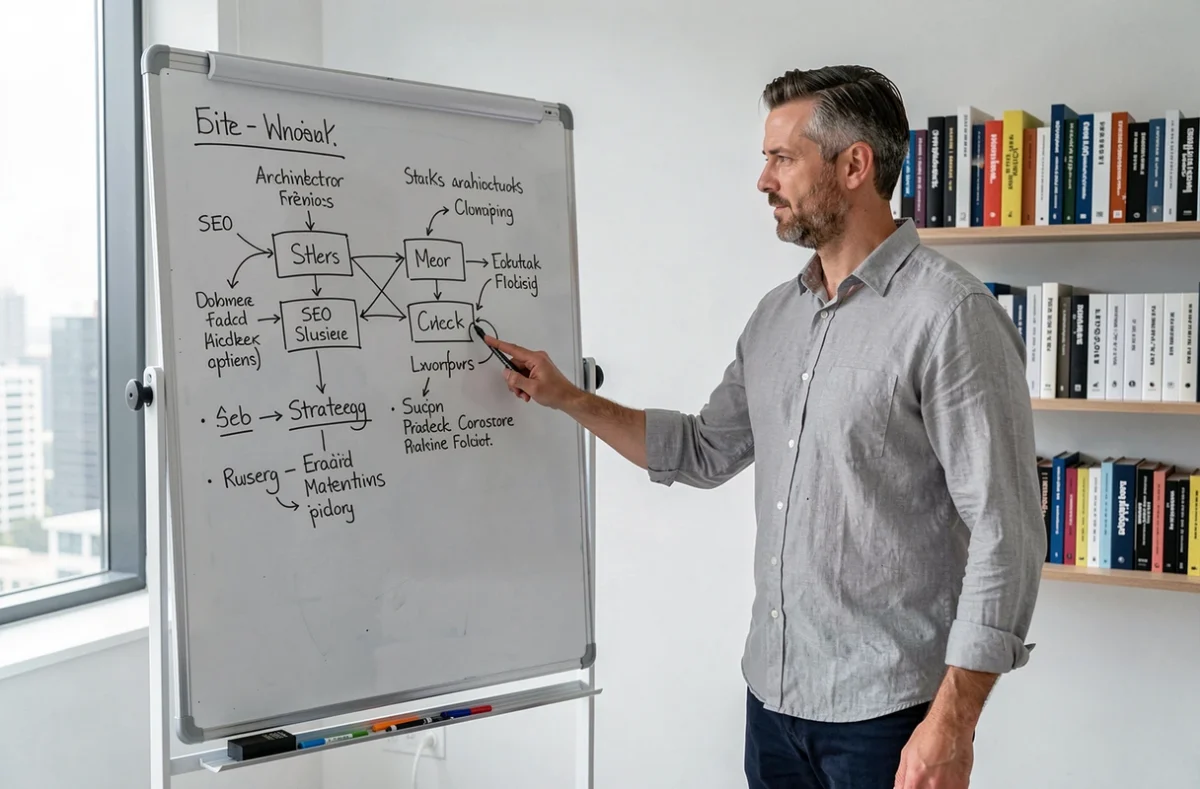
SEO content strategy adapted to informational and transactional queries
Treating each page according to the search intent it targets changes the way content is produced. A product sheet and a blog article do not respond to the same visibility mechanism, and applying the same recipe to both is a common mistake.
Informational pages: structure to be cited
On queries like “how” or “why,” the response generated by Google’s AI synthesizes several sources. To increase your chances of being included, we recommend:
- Answering the question in the first lines of the content, with a concise and factual formulation that the model can extract directly
- Structuring sub-sections with H2 and H3 that reflect variations of the query, as the generative engine draws from the most relevant passages related to the question asked
- Favoring short declarative sentences over long narrative paragraphs to facilitate the automatic extraction of a snippet
Transactional pages: protect organic clicks
Action queries (“buy”, “book”, “quote”) less frequently trigger an AI Snapshot. Traditional technical SEO retains its full value here: loading times, structured data of type Product or LocalBusiness, and Title optimization for click-through rates.
Clearly separating informational content from conversion pages in your site structure also facilitates internal linking. A well-positioned blog article in generated responses can direct qualified traffic to a transactional page via a contextual link, without the latter needing to compete on informational queries.
Technical optimization for organic search and AI responses
Crawlability remains the foundation. If Googlebot cannot crawl or index a page, no editorial optimization will compensate. We find that several technical points are often overlooked, yet they condition eligibility for snippets and generated responses.
- The robots.txt file must not block the CSS and JavaScript resources necessary for rendering the page, as Google needs to see the content as the user sees it
- Improperly configured canonical tags cause indexing conflicts that exclude pages from the pool of sources usable by the generative engine
- Schema.org markup (FAQ, HowTo, Article) is not mandatory to appear in AI Snapshots, but it helps the engine understand the content structure and identify relevant passages
- The HTTPS protocol and a server response time of less than one second remain non-negotiable prerequisites for organic positioning
A technically sound site is a prerequisite for any visibility strategy, whether in traditional results or in generative features.

Backlinks and domain authority in the face of generative engines
Link building has not lost its weight in the ranking algorithm. However, its role is evolving in the context of AI responses. Google’s generative model selects its sources partly based on the perceived reliability of the domain. A profile of natural links from thematically related sites enhances this reliability more than a raw volume of general backlinks.
We recommend focusing acquisition efforts on editorial links from publications specialized in your industry. A single contextual link from a recognized media outlet in your field carries more weight than ten links from directories or press releases.
Internal linking plays a complementary role. Linking informational pages to each other and to conversion pages distributes PageRank coherently and signals to the engine the hierarchy of your site.
Measuring SEO visibility beyond click-through rates
With AI Snapshots, part of the potential traffic no longer generates clicks to your site, as the response is consumed directly on the results page. Traditional metrics (organic sessions, click-through rates) are no longer sufficient to evaluate your SEO performance.
Google Search Console now displays impression data for rich features. Tracking the evolution of impressions on informational queries, even without associated clicks, provides an indicator of presence in generated responses. Visibility in results is no longer measured solely in clicks, but also in citations and unclicked impressions.
Cross-referencing this data with tracking traditional organic positions allows you to identify pages that are losing clicks despite good positioning, indicating that an AI Snapshot is capturing the query. On these pages, strengthening the call to action in the meta description or adding an angle that the generated response does not cover can help recover some of the lost traffic.