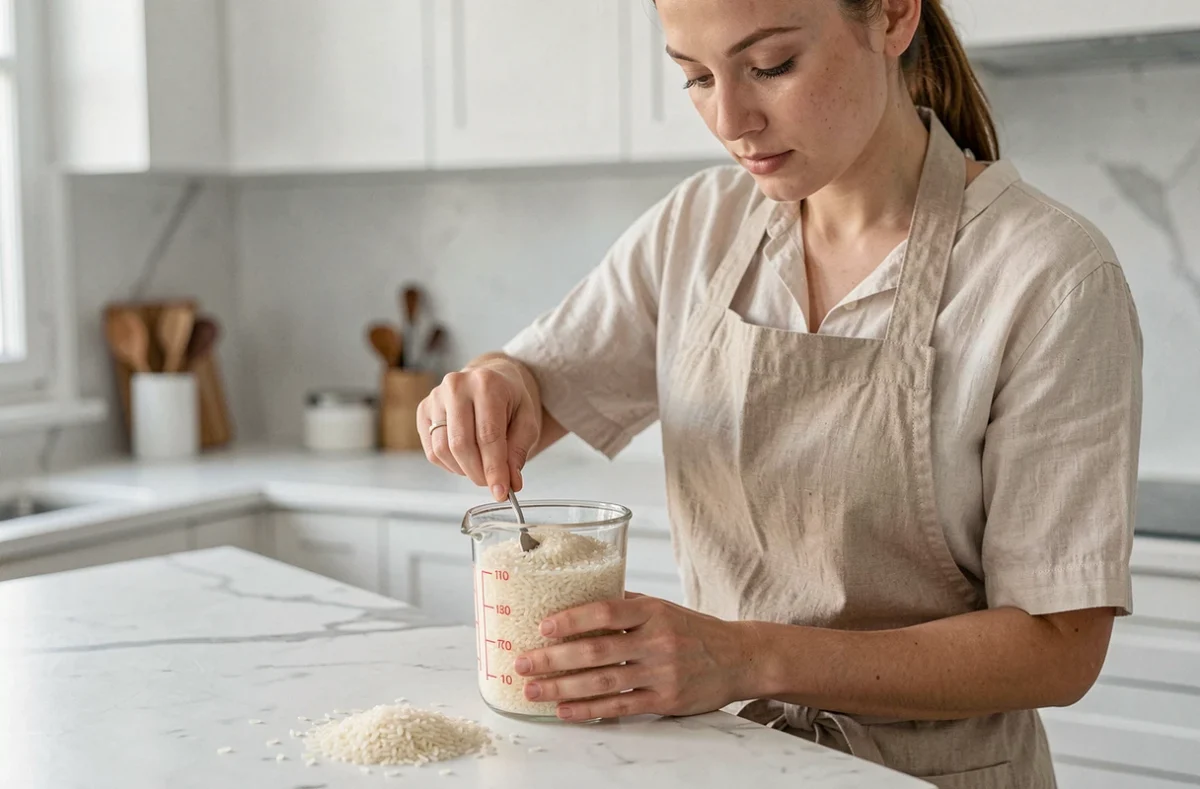
Too much rice in the pot, not enough on the plate: measuring rice presents a real problem at every meal. The difficulty doesn’t stem from a lack of good intentions, but from the fact that rice changes volume during cooking, that each variety absorbs water differently, and that appetite varies depending on the dish prepared. Measuring rice correctly means understanding a few simple mechanisms and adapting them to your daily cooking.
Why the volume of rice changes so much during cooking
You may have noticed that a small glass of uncooked rice fills an entire plate once cooked? It’s not just an impression. Rice absorbs water and swells considerably during cooking, sometimes doubling or tripling in volume depending on the variety.
Basmati rice, with its long and slender grains, swells a lot in length. Round rice, used for risotto or desserts, absorbs water while maintaining a more compact texture. Whole grain rice, which retains its bran layer, absorbs water more slowly and requires a longer cooking time.
This difference in behavior explains why the same quantity in grams does not yield the same result on the plate. Before discussing measurements, it’s important to know what type of rice is in the pantry. To delve deeper into this topic, you can read on Les Coudes sur la Table for additional guidelines on suitable portions.
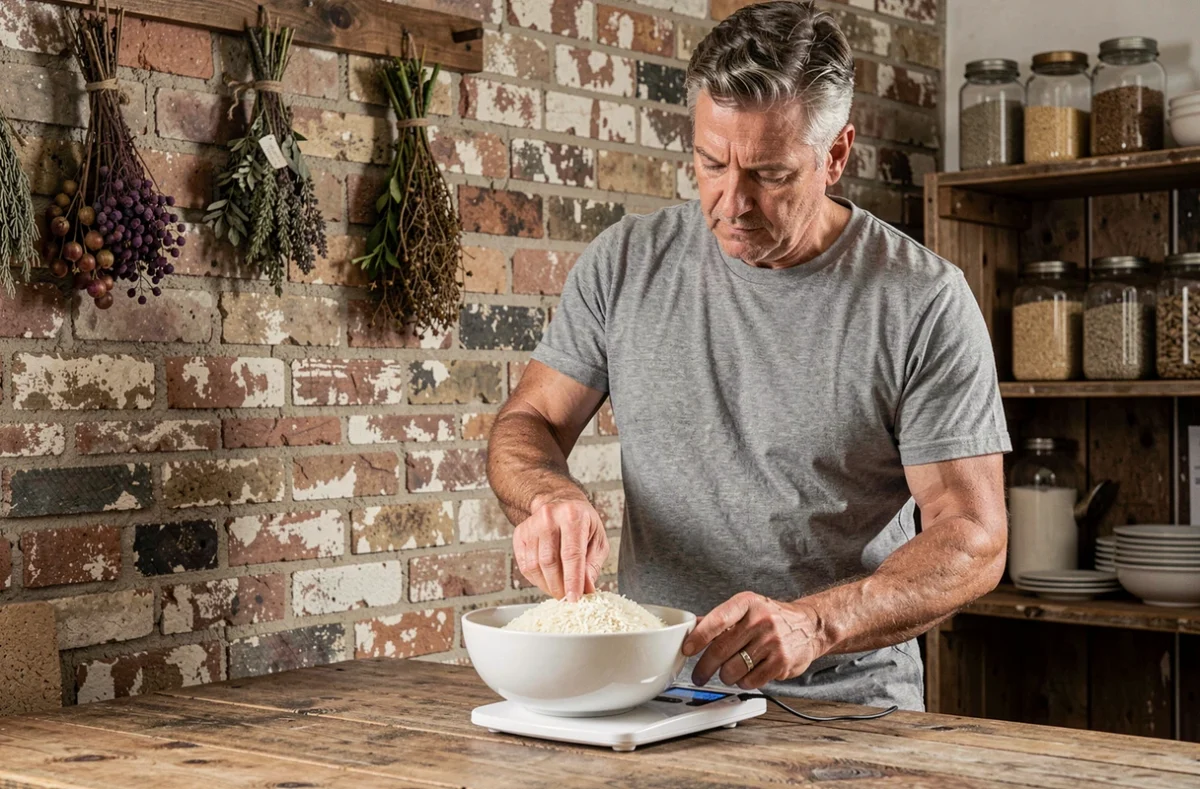
Measuring rice without a scale: the glass method
Weighing rice to the exact gram isn’t always practical, especially during the week. The most reliable method when you don’t have a scale is a standard glass, the one you use for drinking water.
A glass of uncooked rice serves about two people as a side dish. For a dish where rice is the main element (like vegetable fried rice, for example), you should count an additional half glass.
Adjusting the quantity based on the role of rice in the meal
The measurement directly depends on the role of rice on the plate. Rice served as a side next to fish or meat doesn’t require the same quantity as a creamy risotto that constitutes the dish on its own.
- As a simple side (with a protein and vegetables), half a glass of uncooked rice per person is more than enough.
- As a main dish (risotto, fried rice, vegetable rice), count one glass of uncooked rice for two people or a good half glass per guest.
This simple guideline helps avoid excess without complicated calculations. The glass replaces the scale in most everyday situations.
Rice-water ratio: the true factor for consistent results
Measuring rice is pointless if the amount of water isn’t consistent. The ratio between the volume of rice and the volume of water determines the final texture, much more than the cooking time.
A different ratio depending on the variety
For basmati rice or long-grain white rice, the classic ratio is one volume of rice to one and a half volumes of water. Whole grain rice requires more water and a longer cooking time. Risotto rice (arborio, carnaroli) works differently: broth is added gradually, in several stages, to achieve the characteristic creamy texture.
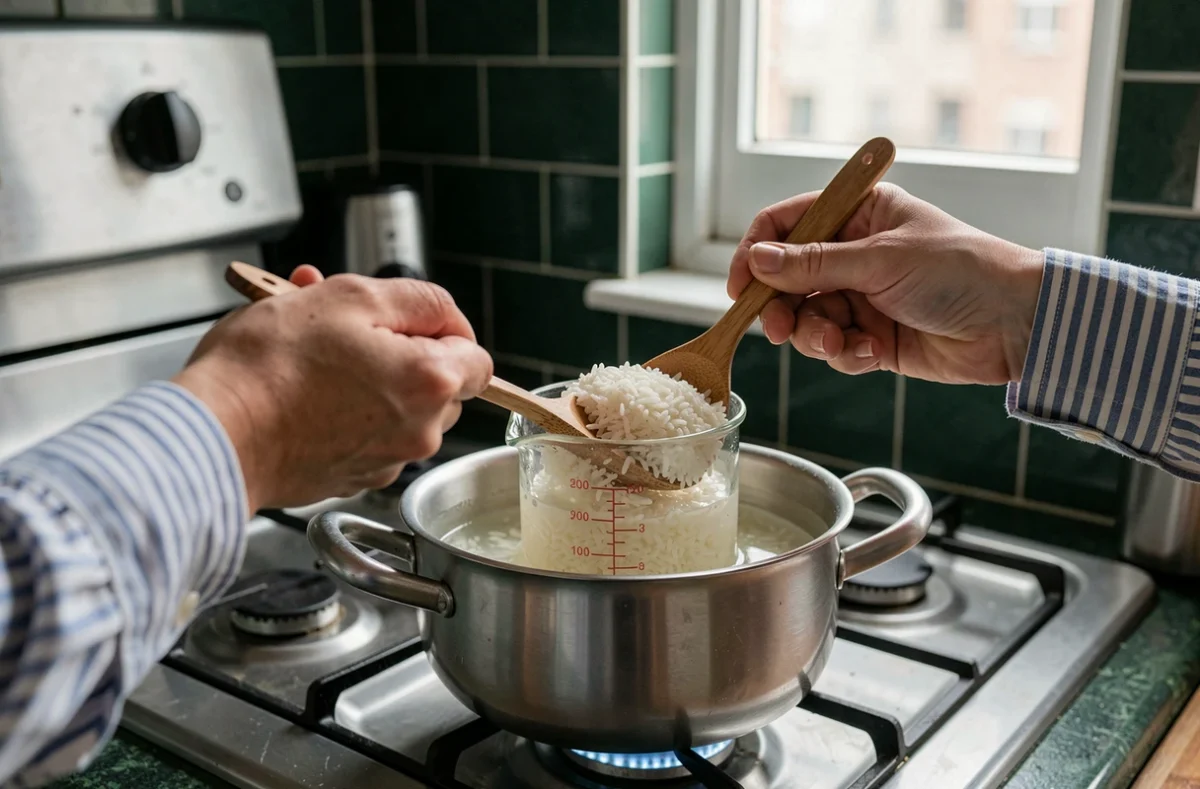
In practice, if you use a glass as a measure for the rice, use the same glass to measure the water. This eliminates conversion errors between grams and milliliters.
The choice between absorption cooking or boiling
Absorption cooking (where all the water is absorbed by the grains) is the most common. It concentrates flavors and retains nutrients in the grain.
Boiling, where rice is cooked in a large volume of water and then drained, offers a different advantage. Cooking in six to ten volumes of water and then discarding the excess can reduce the inorganic arsenic content of rice, according to recommendations from the U.S. Food and Drug Administration. The downside: some of the water-soluble nutrients (notably B vitamins) are lost with the cooking water.
This choice is not trivial. Whole grain rice, despite its superior nutritional benefits, tends to contain more arsenic than white rice due to its retained bran. Varying the types and cooking methods throughout the week is a reasonable compromise.
Managing leftover rice without health risks
An approximate measurement often leaves excess rice in the pot. The issue isn’t just waste: cooked rice left at room temperature encourages the proliferation of Bacillus cereus, a bacterium that produces heat-resistant toxins.
The rule is simple. Cooked rice must be cooled quickly (within an hour after cooking) and placed in the refrigerator in a closed container. It can then be stored for one to two days. Beyond that, it’s better to throw it away.
- Spread the rice on a large plate or tray to speed up cooling.
- Never leave rice in a covered pot on the countertop for several hours.
- When reheating, ensure that the rice is heated thoroughly, not just warm on the surface.
Measuring correctly from the start remains the best prevention against waste and health risks. Half a glass of uncooked rice per person as a side, one glass for two as a main dish: these guidelines cover most situations without leaving problematic excess.
Measuring rice requires no special equipment or complex calculations. A glass, an identified variety, an appropriate water-rice ratio, and quick management of leftovers are all you need to achieve the right amount at every meal.