Most sorting centers refuse wooden cutting boards, even when they are clean. Yet, wood remains a valued material for its transformation possibilities and low carbon footprint.
Local regulations sometimes prohibit their disposal in regular waste facilities, which forces us to explore other avenues to reduce waste. Some companies and associations already offer recovery or upcycling solutions, thus promoting a circular economy.
Why recycling a worn wooden cutting board makes all the difference for the environment
Recycling a wooden cutting board that is damaged is not just ticking a box on a list of good practices; it is showing coherence with the times. This kitchen utensil, a daily companion for recipes and precise cuts, inevitably bears the marks of time: scratches, persistent stains, ingrained moisture. Unlike plastic or glass, wood deteriorates faster, but it offers real opportunities for a second life that weigh heavily in the ecological balance.
Extending the use of these boards, instead of throwing them away, eases the pressure on forests, reduces the amount of waste, and aligns with a concrete zero waste approach. The wooden cutting board does not necessarily end up in a landfill: it can be transformed into recycled material for useful or decorative objects. Tray, ladle holder, tablet stand, wall clock… Reuse artisans and the DIY movement give these boards a new value, in line with the circular economy and sobriety.
The recycling of the wooden cutting board also prevents pollution generated by incineration or abandonment in the organic waste stream. An object thrown away, even if made of bamboo, eventually releases carbon, whereas it could have had a different fate. For those who want to go further, practical tips on Chapeau Melon detail various tips and collection avenues to give meaning back to these worn objects. A cutting board, before becoming waste, deserves reflection and creativity.
What are the eco-friendly options to give a second life to your damaged board?
Giving a new use to a wooden cutting board that is tired means choosing accessible, responsible, and often economical actions. Several solutions exist to limit the creation of waste and reinforce the zero waste spirit.
Before considering recycling, try natural restoration: rub the surface with a walnut, whose oil revitalizes the wood, reduces wear marks, and protects against water infiltration. A few drops, a soft cloth, and the board comes back to life, at least for a while.
Maintenance plays a crucial role in the second life of this kitchen utensil. Wash it with warm water and mild soap, and dry it immediately. Avoid the dishwasher, which warps and cracks the wood. Once thoroughly dry, enhance its protection with a thin layer of vegetable oil or linseed oil. This limits the absorption of stains and moisture.
To prevent the board from absorbing odors or colored juices, cover it with a sheet of parchment paper or plastic wrap during the cutting of particularly messy foods. This precaution simplifies cleaning and preserves the surface.
When the board is no longer suitable for use in the kitchen, there remains the option of creative transformation. A light sanding is enough to turn it into a tray, a slate, a tablet stand, or a decorative base. The wood, even marked, finds a function within the home and reduces the environmental impact of our daily actions.
Simple and inspiring DIY ideas to transform your old cutting board
Imagining a second life for a wooden cutting board opens up a world of possibilities for home creation. This imperfect material, rich in history, becomes the starting point for many DIY projects, useful or simply decorative. A bit of sandpaper, some wax or paint, and the object is ready for a new adventure.
Inspirations for everyday objects
Here are some concrete ideas to give a new function to your wooden board:
- Transform it into a tray for appetizers or breakfasts: two handles in brass or rope are enough to create a friendly object that is both practical and aesthetic.
- Attach hooks on the edge: the board becomes a key holder or utensil rack, to be installed in the entryway or kitchen.
- Apply chalkboard paint on one side: it transforms into a wall slate for jotting down the shopping list or a daily message.
- Drill a hole, thread a sturdy string through it, and hang it up: the ladle holder finds its place near the stove.
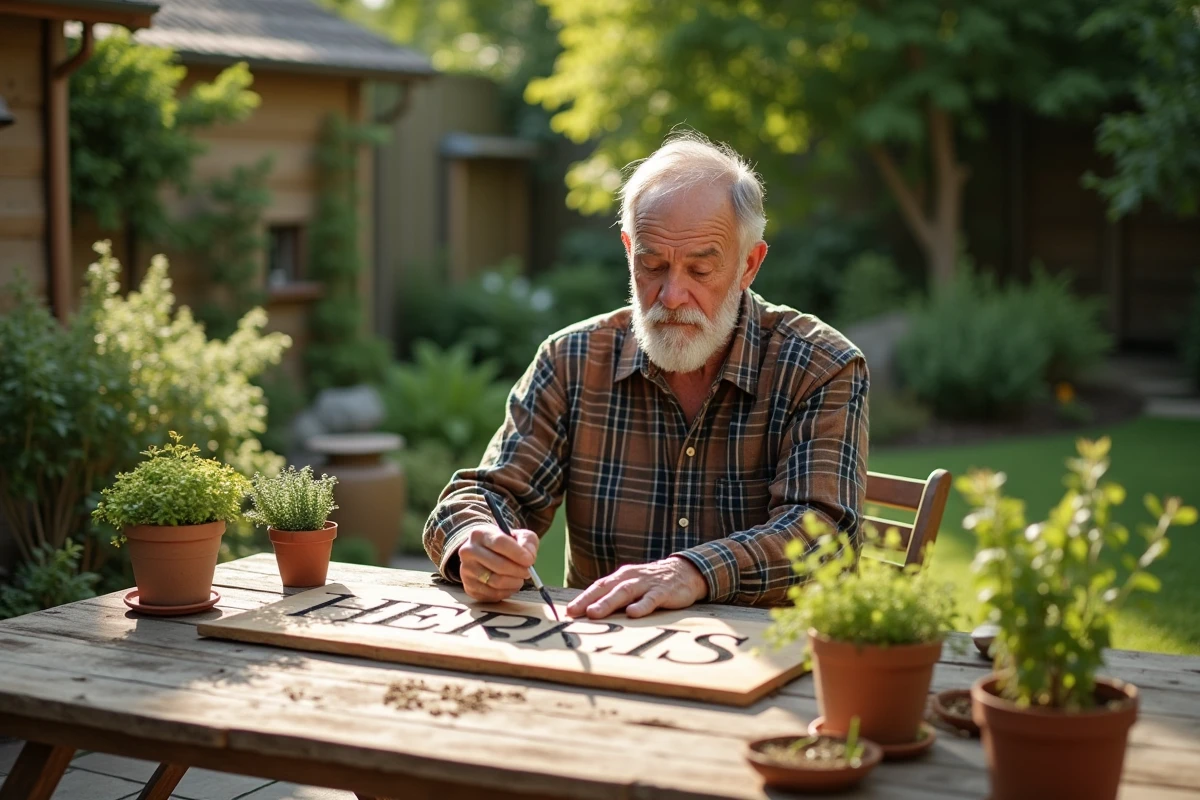
The creative possibilities do not stop there. The decorated board can be personalized as desired: decoupage, pyrography, acrylic paint… For plant lovers, add a few flower pots and the board transforms into a vertical plant stand, perfect for fresh herbs or decorative sprouts.
Some go further: a sturdy board becomes the base of a tablet stand, a small photo tripod, or even an element in a modular furniture. Wood, robust and warm, adapts to all desires while maintaining its eco-responsible character. The cycle never really stops: each worn board awaits its next mission.